
Unraveling Diabetes: Type 1 vs Type 2

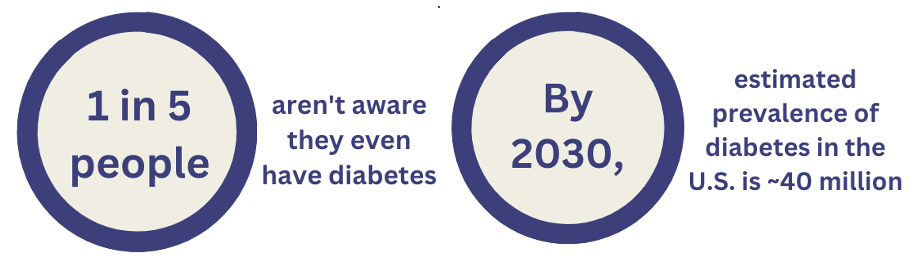
Diabetes remains one of the most common chronic health conditions in the United States. According to the Centers for Disease Control and Prevention (CDC), more than 38 million Americans are living with diabetes, and approximately one in five people are unaware they have the disease. Additionally, more than 97 million U.S. adults have prediabetes, placing them at increased risk of developing type 2 diabetes. As the prevalence of diabetes continues to rise, awareness, prevention, and effective management remain critical public health priorities.

The encouraging news is that diabetes can often be prevented, delayed, or effectively managed through lifestyle modifications, medications, and regular monitoring. However, not all forms of diabetes are the same. Understanding the differences between type 1 diabetes mellitus (T1DM) and type 2 diabetes mellitus (T2DM) is essential for selecting appropriate treatment strategies and improving long-term health outcomes.

Overview of Diabetes

Diabetes mellitus is a chronic metabolic disorder characterized by elevated blood glucose levels. Glucose serves as the body’s primary source of energy, while insulin, a hormone produced by the pancreas, helps transport glucose from the bloodstream into cells where it can be used for energy. When insulin is absent, insufficient, or ineffective, glucose accumulates in the blood. Over time, persistently elevated blood glucose levels can lead to serious complications affecting the cardiovascular system, kidneys, eyes, nerves, and blood vessels. Although there is currently no cure for diabetes, advances in medications, technology, and patient education have significantly improved disease management and quality of life.

Type 1 Diabetes Mellitus

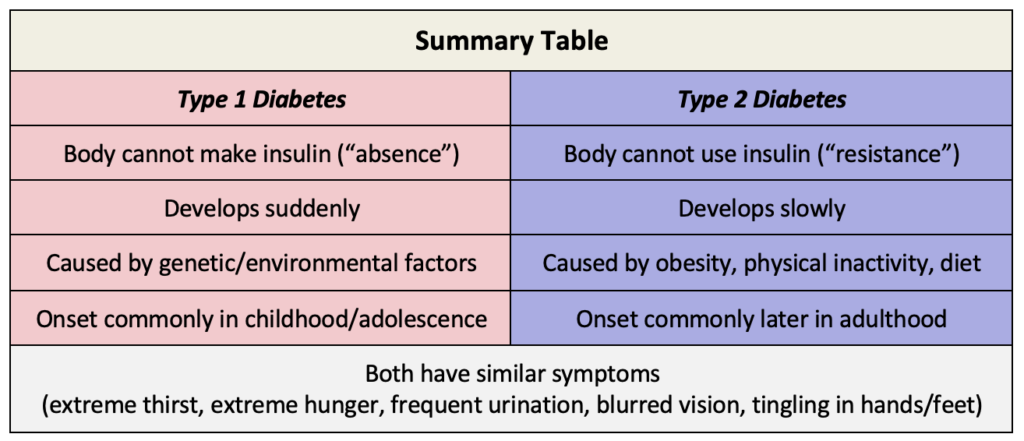
Type 1 diabetes is an autoimmune condition in which the body’s immune system mistakenly attacks and destroys the insulin-producing beta cells of the pancreas. As a result, the body produces little to no insulin. Although the exact cause remains unclear, genetic predisposition and environmental triggers are believed to contribute to its development.

Type 1 diabetes most commonly develops during childhood, adolescence, or young adulthood, although it can occur at any age. Symptoms often appear rapidly and may include increased thirst, frequent urination, unexplained weight loss, fatigue, blurred vision, and increased hunger. Because the body can no longer produce sufficient insulin, lifelong insulin therapy is required. Unlike type 2 diabetes, type 1 diabetes is not associated with obesity or physical inactivity.

Type 2 Diabetes Mellitus

Type 2 diabetes develops when the body’s cells become resistant to insulin, making it difficult for glucose to enter cells efficiently. Over time, the pancreas may also lose its ability to produce adequate amounts of insulin, further impairing blood glucose control. Type 2 diabetes accounts for approximately 90% to 95% of all diabetes cases and is strongly associated with overweight and obesity, physical inactivity, family history, increasing age, certain racial and ethnic backgrounds, and a history of gestational diabetes.

Unlike type 1 diabetes, type 2 diabetes often develops gradually over several years and may initially cause few or no symptoms. When symptoms do occur, they commonly include increased thirst, frequent urination, fatigue, blurred vision, slow-healing wounds, recurrent infections, and numbness or tingling in the hands and feet.

Key Differences Between Type 1 and Type 2 Diabetes

Although both forms of diabetes result in elevated blood glucose levels, they differ significantly in their causes, progression, and treatment approaches. Type 1 diabetes results from autoimmune destruction of insulin-producing cells, leading to little or no insulin production and requiring lifelong insulin therapy. It often develops rapidly and is not linked to obesity. In contrast, type 2 diabetes is characterized by insulin resistance and progressive insulin deficiency. Insulin is typically still produced in the early stages, but it becomes less effective over time. The condition usually develops gradually and is commonly associated with excess body weight. Treatment may include lifestyle modifications, oral medications, non-insulin injectable therapies, insulin, or a combination of these approaches.

Management of Diabetes

Effective diabetes management requires a personalized and comprehensive approach. Healthy nutrition plays a central role, with an emphasis on fruits, vegetables, whole grains, lean proteins, healthy fats, and appropriate portion control. Regular physical activity is equally important because it improves insulin sensitivity, supports weight management, and reduces cardiovascular risk. Current recommendations generally encourage at least 150 minutes of moderate-intensity physical activity each week for most adults.

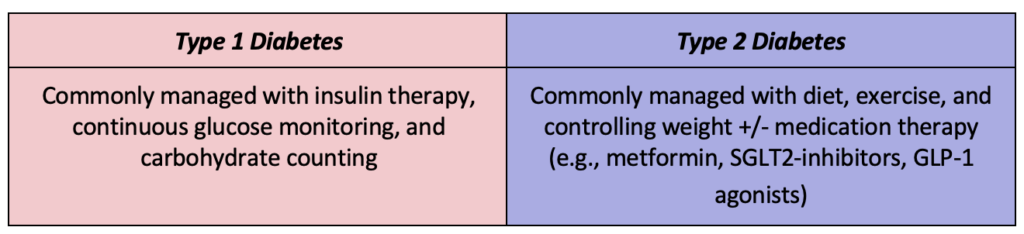
Medication therapy varies depending on the type of diabetes and individual patient needs. People with type 1 diabetes require insulin therapy to survive, whereas those with type 2 diabetes may be treated with lifestyle interventions, oral medications, non-insulin injectable therapies such as glucagon-like peptide-1 (GLP-1) receptor agonists, insulin, or a combination of these options. Weight management is particularly important in type 2 diabetes because even modest weight loss can significantly improve insulin sensitivity and blood glucose control. Conversely, unexplained weight loss may be an early sign of untreated type 1 diabetes.

Regular blood glucose monitoring is another essential component of diabetes care. Monitoring allows patients and healthcare providers to assess treatment effectiveness and make necessary adjustments. Continuous glucose monitoring (CGM) systems have become increasingly popular and provide real-time glucose data that can help improve glycemic control and reduce the risk of complications.

The Pharmacist’s Role in Diabetes Care

Pharmacists play an important role in supporting individuals with diabetes. Through medication counseling, patient education, and ongoing monitoring, pharmacists help patients understand their medications, recognize potential side effects and drug interactions, improve medication adherence, learn proper insulin administration techniques, interpret blood glucose readings, and implement lifestyle modifications. Their involvement can contribute significantly to improved glycemic control and reduced risk of long-term complications.

Although type 1 and type 2 diabetes share elevated blood glucose as a common feature, they differ substantially in their underlying causes, progression, and treatment approaches. Early diagnosis, appropriate therapy, healthy lifestyle choices, and consistent monitoring are critical for successful management of both conditions. As diabetes prevalence continues to increase, healthcare professionals, including pharmacists, remain essential in providing education, support, and evidence-based care that empowers patients to achieve better health outcomes.

Original Author: Midrara Kashmari

Editorial Update (June 2026): Elizabeth Rodriguez

RxPharmacist Team

References:

  1. Centers for Disease Control and Prevention. What Is Diabetes? Centers for Disease Control and Prevention. Published April 24, 2023. https://www.cdc.gov/diabetes/basics/diabetes.html.
  2. CDC. The Facts, Stats, and Impacts of Diabetes. Centers for Disease Control and Prevention. Published 2022. https://www.cdc.gov/diabetes/library/spotlights/diabetes-facts-stats.html.
  3. Differences Between Type 1 and Type 2 Diabetes – DRC. Diabetes Research Connection. Published July 11, 2016. https://diabetesresearchconnection.org/differences-type-1-type-2-diabetes/?gclid=CjwKCAjwivemBhBhEiwAJxNWN4Hy-wLZ7LNw0yqLEzbHiQ21nhpBRs_0yeq16PHSc69ZPXkZkXhoAhoC5cMQAvD_BwE.
  4. Type 1 Vs Type 2 Diabetes. DRIF. https://diabetesresearch.org/type-1-vs-type-2-diabetes/.
  5. NIDDK. Symptoms & Causes of Diabetes | NIDDK. National Institute of Diabetes and Digestive and Kidney Diseases. Published March 2019. https://www.niddk.nih.gov/health-information/diabetes/overview/symptoms-causes
  6. Lin J, Thompson TJ, Cheng YJ, et al. Projection of the future diabetes burden in the United States through 2060. Population Health Metrics. 2018;16(1). doi:https://doi.org/10.1186/s12963-018-0166-4.

Leave a Comment

error: Content is protected !!
Popup Form

Want to get a free MPJE® or NAPLEX® cheat sheet? Subscribe to our email list!

By subscribing to this email list, you agree to our Privacy Policy and consent to receive emails from us.

MPJE® is a registered trademark of the National Association of Boards of Pharmacy. RxPharmacist®, LLC. and its services are neither affiliated with nor endorsed by the NABP®. None of the trademark holders is affiliated with, and does not endorse RxPharmacist’s product/site.

0